Posts

Showing posts with the label 1957

Mother India [1957] : Mehboob Khan

Image
  Mehboob Khan’s Mother India [1957] is a melorealistic movie [I prefer to use MELODRAMA when the story is written fully on fictional ground & MELOREAL when story is adapted from real incidence with fictional touch ] I have seen after Bimal Roy’s Do Bigha Zamin [1954] just the following Satyajit Ray’s Pather Panchali [1955]. It’s evidently clear that South Asian cinema had flourished after post-independence & partitions.   The first half, till Ramu & Birju being grown up, is a superbly a true realist film and is commendable but it turned into melodramatic with so many subplots and compulsively emotional chronicles that made Mother India a near epical cinema. Mother India had a probability to fall into the genre of Akira’s Rashomon [1950] in respect of the high morality of women character and with all the loopholes of social justice. But its hyperbolic melodrama kept it stayed back with the Indian formula film.   There are some establishing and epic s...

Pyaasa [1957] : Guru Dutt

Image
The opening scene of Pyaasa (1957) where Bijoy (Guru Dutt) laying on the grasses and observing the playfulness of nature is just as mindful as a flying butterfly or the floating clouds. The extra close-up shots are masterful and as elegant & detailed as the impressionist paintings. I think the sequence where Gulabo (Waheeda Rehman) lures Bijoy to her Kotha (whorehouse) singing a song with a tune of his lyrics (Shayari Ka dhun) and he stalks after her through the surrealistic alleys of the city is nothing but a subtle experience of cinematic visuals. One needs a gifted artistic sensibilities of or longstanding adoration and cultivation over narratives & visuals to touch such marvelous milestones. Guru Dutt is one of the raw and rare auteurs following the tradition of Charlie Chaplin, Tarkovsky, Bimal Roy, Alamgir Kabir & so on and on. Pyaasa [1957] Guru Dutt Hindi, India

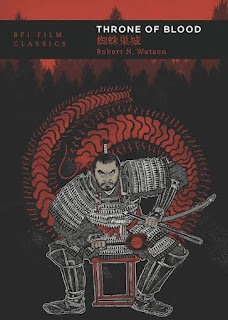
Throne of Blood : Akira Kurosawa

Image
  Sometimes, I watch some parts of a film in mute mode like the silent era; I do not read the titles. The reason behind these errands is very crucial to me; firstly, I want to catch the story line without external assistance then comes the point of finding the thrilling cinematic tempo and pace of the film themselves. If I can stand by the following sequences and enjoy the moments of watching the film, I come to the conclusion that this is a good film and can survive the taste of time and space beyond borders. This is one kind game for me as of today.   I was not informed about the inspiration of Throne of Blood [1957] and it is likely a Japanese adaptation of Shakespeare’s Macbeth [1606]. But in the course of the watching, the film seemed to me a bit gray and monotonous in the tempo and mood. May be mostly because of its theatrical, gothic and formalist staging and acting. But Akira’s cinematic compositions, Toshiro Mifune’s spirited acting and Masaru Sato’s subtle musical sc...

A King in New York : Charlie Chaplin

Image
A King in New York [1957] was the first film Chaplin made after being banned in the USA and the movie released in the UK. It is another utopian film after The Great Dictator [1940] in which he realized the Hitler’s absolutism in Europe. The tendency to absolutism is parodically exercised also in a modest way in A King in New York [1957]. With the prior one he almost predicted the possible horrendous European crisis resulting from Nazism, with the later one he actualized it’s not so easy as we think of that we could be free in democratic setup without seamless state surveillance.   I was nearly as stoned as to hear when king of Estrovia, Shahdov ( Charlie Chaplin ) got a bold and firm reply from Rupert Macabee ( Michael Chaplin ) when he answered, “ Should I be a communist to read Marx.” It is a false consciousness universally believed that you are what you do. If you listen to the Bishnu Stotram or Shiv Tandov Stotram, you must be a Hindu but when you listen to Elvis Presl...